











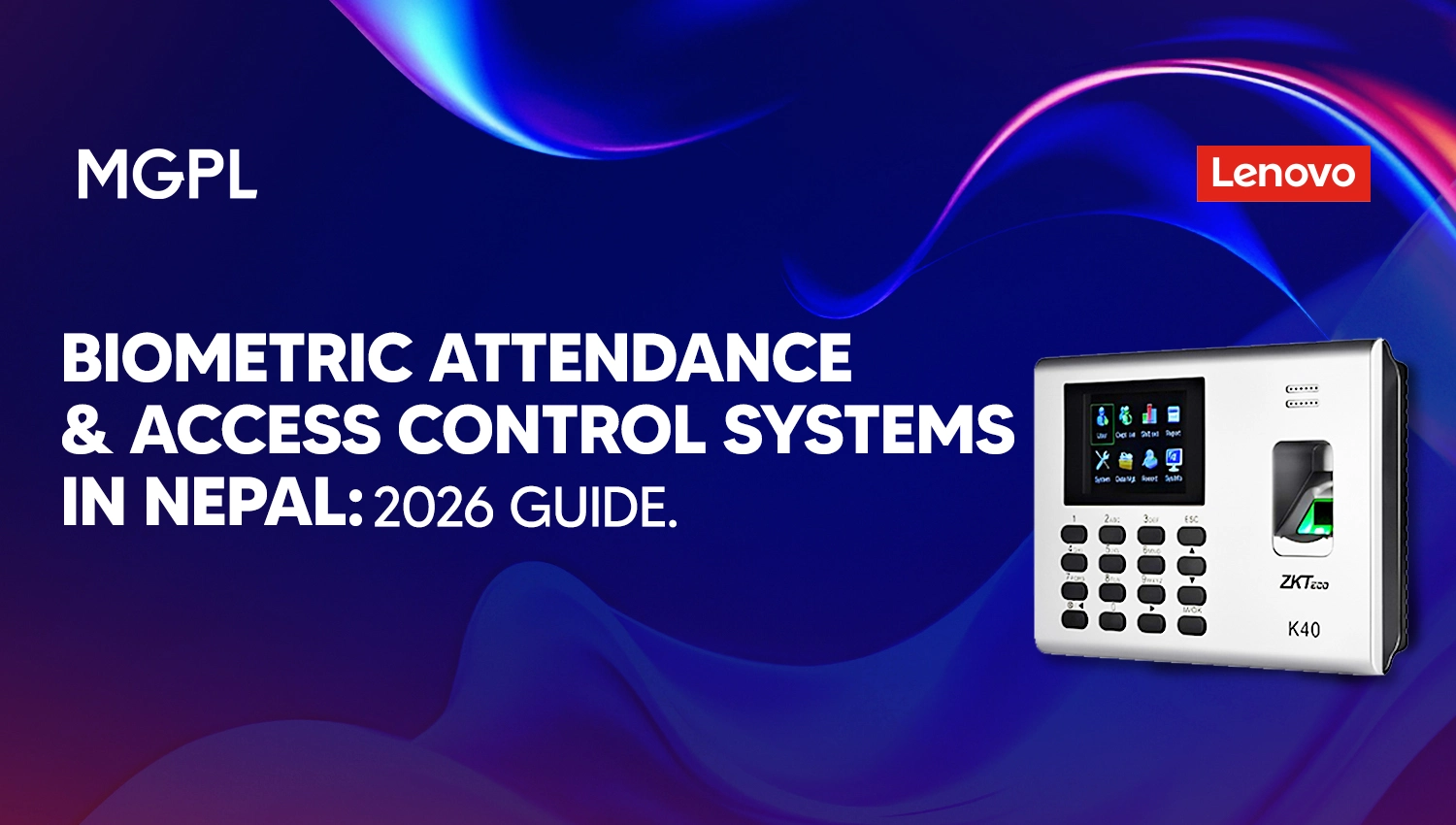
In 2026, managing workforce using paper registers and large spreadsheets sounds too outdated. For some years now, workplaces in Nepal have been using digital systems for biometric attendance and access control.
A time-attendance system records when employees arrive at and leave work. It can track check-in and check-out times, working hours, overtime, late arrivals, and absences. The data can then be used for attendance reports and payroll processing. An access control system determines who can enter a particular location or area. For example, a company may allow all employees to enter the main office but restrict access to server rooms, storage areas, or management offices.
Modern systems also include multi-factor authentication and integrate attendance data directly with HR and payroll software. In this blog, we will look in detail at technologies used for biometric attendance and access control systems.
Major Types of Attendance and Access Control Systems
Businesses in Nepal can choose from several technologies depending on their needs, budget, and security requirements.
1. Biometric Systems
Biometric systems identify people using unique physical characteristics. Common options include:
- Fingerprint recognition: One of the most widely used options for employee attendance.
- Facial recognition: Identifies employees using facial features and can provide a touchless experience.
- Iris recognition: Uses the unique patterns of the eye and is generally used where higher-level identification is required.
- Palm or vein recognition: Uses patterns in the hand or palm for identification.
Fingerprint systems are often suitable for offices and small to medium-sized businesses, while facial recognition can be useful for larger workplaces or environments where touchless access is preferred.
2. RFID and Proximity Card Systems
RFID systems use cards or key fobs that employees can tap or present near a reader. They are simple to operate and can be useful for offices, hotels, schools, warehouses, and other organizations.
However, cards can be lost, shared, or used by another person. Businesses requiring stronger identity verification may therefore combine RFID with biometric authentication.
3. PIN-Based Systems
Employees enter a personal PIN to record attendance or unlock a door. These systems are relatively simple but provide less secure identification than biometric systems because PINs can be shared.
4. Multi-Authentication Systems
Some access control systems allow businesses to use more than one authentication method. For example, access may require a card and PIN, or facial recognition and another credential.
This can provide an additional layer of security for sensitive areas.
Key Features to Look For
The right system depends on the organization’s requirements. Some useful features include:
- Employee check-in and check-out
- Fingerprint or facial recognition
- RFID card support
- Control access to specific rooms or areas
- Real-time attendance monitoring
- Late and overtime tracking
- Shift management
- Leave and holiday management
- Attendance reports
- Automatically use attendance data for salary calculation and report preparation
- Multiple-device or multiple-location management
- Mobile or web-based access
- Door lock and exit button integration
- Backup and data export options
For businesses with multiple branches, centralized software can be useful because attendance and access information can be managed from one platform.
Installation Requirements
Installing an attendance or access control system involves more than simply mounting a device on a wall. The installation team may need to assess the location, number of employees, entry points, network availability, power supply, and door type before recommending the appropriate setup.
A typical access control installation may include:
- Biometric or RFID reader
- Access controller
- Electric or magnetic door lock
- Exit button or sensor
- Power supply
- Network connection
- Attendance and access management software
For biometric attendance alone, installation is simpler because the system may only require a terminal, power connection, network connection, and software.
For multiple doors or restricted areas, the system needs to be planned carefully so that each access point works correctly and securely.
Software and System Integration
Hardware is only one part of a modern attendance and access control system. The software is responsible for managing the data collected by the devices.
Businesses can use software to create employee profiles, assign working schedules, monitor attendance, manage access permissions, and generate reports. Integration can make the system even more useful. Depending on the available solution, it may be connected with:
- Payroll systems
- HR management software
- ERP systems
- Employee databases
- CCTV and security systems
- Door and building management systems
For example, attendance data can be transferred to an HR or payroll system instead of requiring HR staff to enter the information manually.
Security Considerations
Security should be considered when choosing any biometric or access control system. Businesses should check how employee information is stored, transmitted, and protected. Access to attendance and biometric data should be limited to authorized personnel.
It is also important to consider backup authentication methods. For example, a system should have an appropriate alternative if a biometric reader cannot recognize an employee due to a damaged finger, lighting conditions, device issues, or other circumstances.
For access control, businesses should also consider what happens during a power or network failure. Backup power, emergency exit arrangements, and appropriate fail-safe or fail-secure configurations should be planned according to the building and safety requirements.
How to Choose the Right System in Nepal
Before purchasing a system, consider the following questions:
How many employees will use it?
A small office does not necessarily need the same system as a large factory with hundreds of employees.
How many entry points need to be controlled?
If you only need attendance tracking, a standalone biometric terminal may be sufficient. Multiple restricted doors may require a complete access control setup.
Which authentication method is suitable?
Fingerprint, facial recognition, RFID, PIN, or a combination can be selected depending on convenience and security requirements.
Does it integrate with your existing software?
If you already use HR or payroll software, check whether the attendance system can integrate data with it.
What support is available after installation?
Choose a supplier that can provide installation, configuration, maintenance, troubleshooting, and technical support.
Can the system grow with your business?
A scalable system can be expanded when you add employees, branches, or access points.
Conclusion
Biometric attendance and access control systems can help Nepali businesses move from manual processes to more organized and secure workplace management. The right solution depends on the organization’s size, number of employees, security requirements, budget, and existing IT infrastructure.
Businesses should consider the complete solution, including hardware, software, installation, integration, security, and after-sales support, while installing Biometric attendance and access control systems.
Choose the Right Attendance & Access Control Solution with Megatech Group
Megatech Group offers reliable attendance and access control solutions for offices, businesses, and other sectors in Nepal. As an authorized ICT distributor, Megatech Group partners with Matrix Comsec to provide its COSEC range of products. From basic attendance terminals to advanced door controllers like the COSEC ARGO FOE212, Megatech Group can help you choose a solution that fits your workplace needs.
We help you select and implement a solution based on your business size, workplace requirements, and security needs.
Talk to Megatech Group to find the right system for your organization.
Frequently Asked Questions (FAQs)
1. What is a biometric attendance system?
A biometric attendance system records employee attendance using unique physical characteristics, such as fingerprints or facial features. It helps businesses track check-in and check-out times, working hours, late arrivals, and absences without relying on manual registers.
2. What is the difference between an attendance system and an access control system?
An attendance system records employee working hours and attendance details, while an access control system manages who can enter specific rooms or buildings. Some systems combine both functions, allowing businesses to track attendance and restrict access using the same platform.
3. Which biometric attendance system is best for businesses in Nepal?
The best system depends on the number of employees, workplace requirements, and security needs. Fingerprint terminals may suit small and medium-sized offices, while facial recognition or multi-authentication systems may be useful for larger workplaces or areas requiring stronger access control.
4. Can biometric attendance systems integrate with HR and payroll software?
Yes, many modern attendance systems can integrate with HR and payroll software. Depending on compatibility, attendance data can be used to calculate working hours, overtime, and absences, helping reduce manual data entry and simplify payroll processing.
5. What equipment is required to install an access control system?
A typical access control installation may include a biometric or RFID reader, an access controller, an electric or magnetic door lock, an exit button, a power supply, and management software. The exact equipment depends on the number of doors and the level of security required.
6. Are biometric attendance and access control systems suitable for small businesses?
Yes, small businesses can use biometric attendance and access control systems to manage employee attendance and secure workplace entry points. A basic attendance terminal may be sufficient for a small office, while businesses with restricted rooms may need additional access control equipment.